|
Mark-8 Restoration
Documentation
Other Mark-8's
Mark-8 Minicomputer
Apple-1
MOS Kim-1
V C F
Imsai 8080
Kenbak-1
TV Typewriter
LSI ADM-3A
ASR-33
The Digital Group
| |
| |
|
|
|
1974
In the fall of '74 I ran across a copy of Radio
Electronics and the Mark 8 Minicomputer in my school library. For the next
two years, owning my own computer was at the top of my goal list. I worked
and saved, and in late '76 I finally had enough to join the computer
revolution. Since power, and not nostalgia ruled, I had long since
forgotten about 8008 based machines, and I spent my savings on a Digital
Group system. The Mark 8 Minicomputer faded from my memory.
|
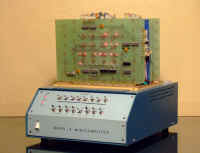
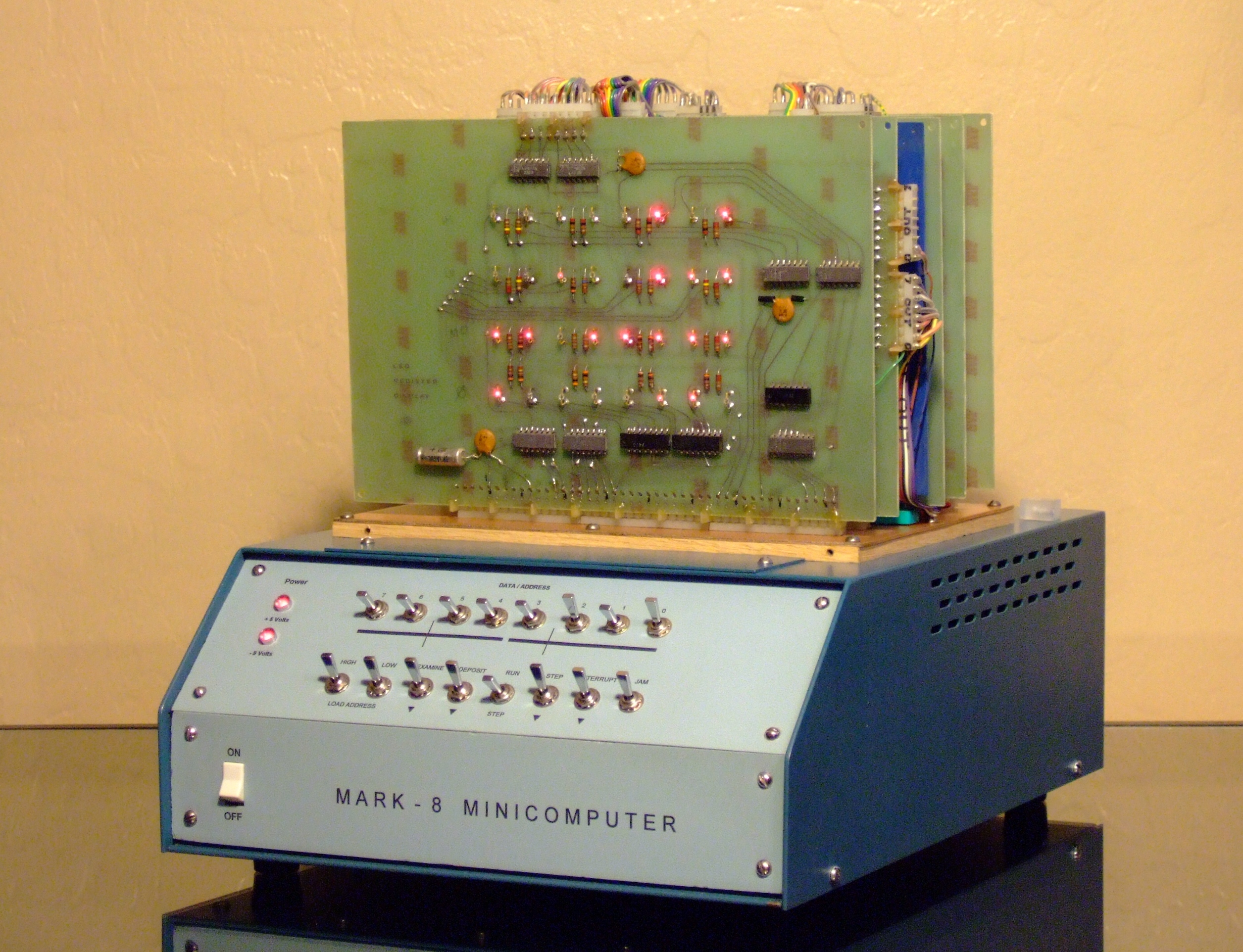
The Mark-8 Minicomputer |
|
|
April 1999
Lucky day! I found myself staring at an eBay auction and a
photo of a Mark 8 circuit board. I could hardly believe my eyes. The
seller had advertised (one board at a time!) a "circuit board for
parts". The boards were listed under "Toys" or some
similarly ridiculous category. The only reason I found them was a search
hit on a different item the seller had listed. I checked the sellers other
auctions, and ta-da! There they were. Conscience got the best of me; I
emailed the seller to inform them of what they had. The seller had an
"oh, well" attitude about it and the auctions proceeded.
Although there were other bidders, I had no intention of being
outbid, and now the Mark-8 is mine!! All mine!!! Aah-ha, ha, ha, ha, ha,
ha, ha, ha, he, ha, he, he, hah, hum, ho, hee, he-heeeee.............what?
After winning all the auctions, the seller contacted me
and asked if I wanted the "whole box of junk", of course I said yes!
The Boards
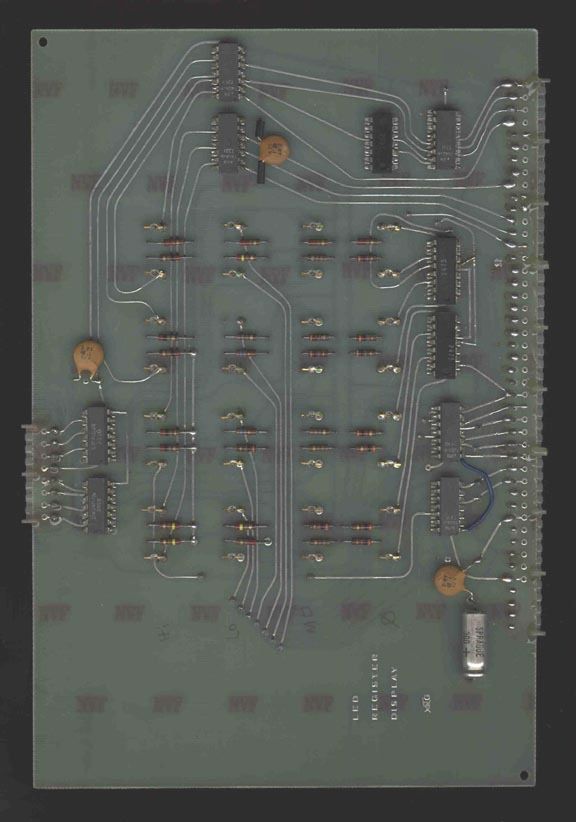
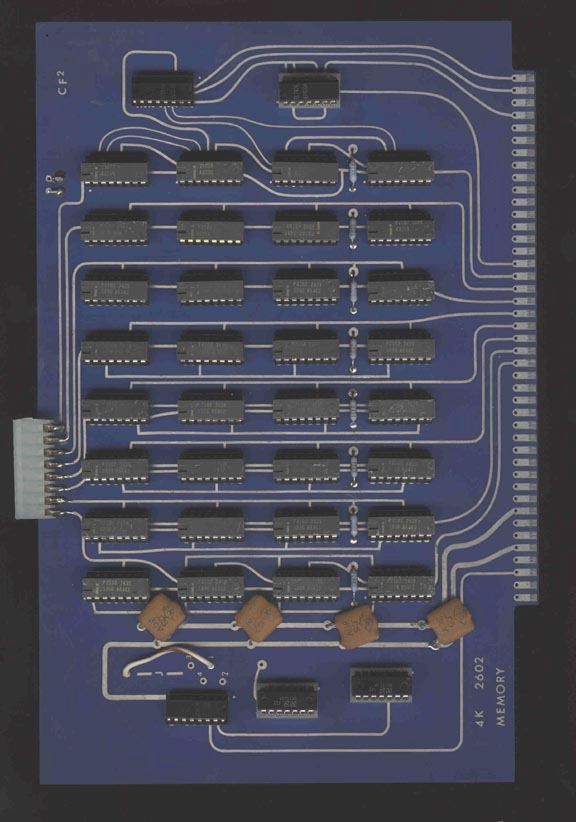
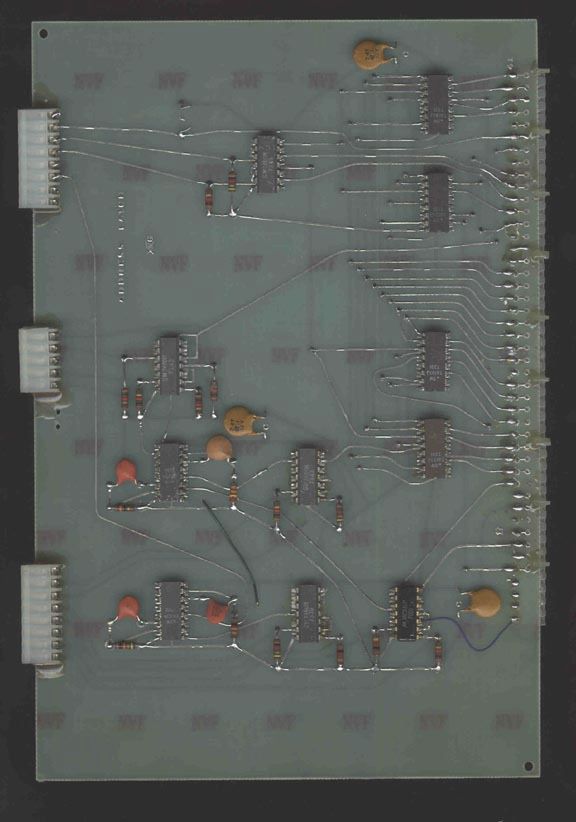
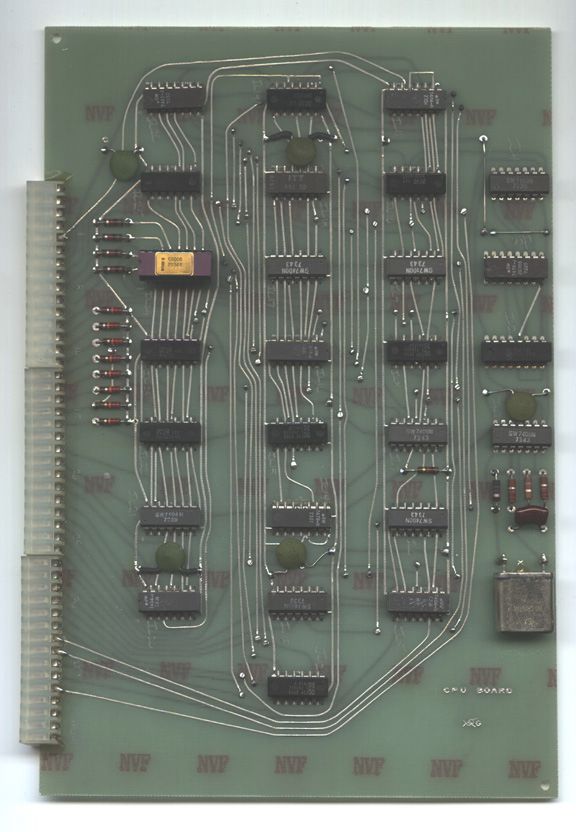
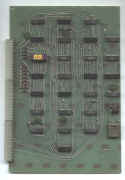
The Mark-8 consists of six boards, shown below. (Click on
the thumbnails for a larger view.) The processor board is a new scan
compared to the others. My original scan was without the C8008 chip, as I
was testing parts of the board, and forgot to put the chip back for the
photo. All the other scans were done soon after I received the boards.
|
|
Register Display
|
|
|
Output Ports
|
|
|
4K Memory
|
|
|
Address Latch
|
|
|
Input Multiplex
|
|
|
8008 Processor
|
|
| |
|
|
|
|
|
At this point, I didn't have enough technical information
on the Mark 8 to begin any serious work, but I started looking for
switches and other items that were not in the 'box of junk"... What's
that kludge circuit on the input Multiplex board?? At this point, I had no
idea.
|
|
September 1999
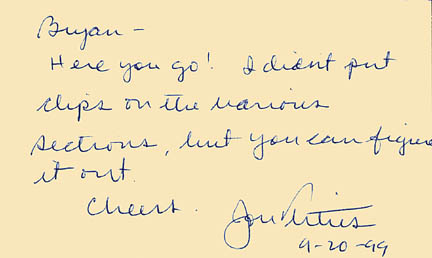
I found an email address and contacted Jon Titus. He was
generous enough to send me a copy of the plans offered by Radio
Electronics in '74, and a few other interesting copies. Including a copy
of the Intel manual describing the 8008 processor. Also included were the
board interconnection diagrams that were missing from the original Mark 8
plans. My thanks to you Jon! I also found a copy of the Mark 8 RE
magazine, a little rough, but not too bad. The images of my magazine are
the ones that appear on this site.
|
|
Note from John Titus
|
|
|
I began restoration by learning how every circuit was
intended to function, and then I tested every circuit in isolation on
every board, one board at a time. This I did by building a signal source
and signal display interface for each board, and then by simulating every
signal the board might ever expect to see. Then I traced out each signal
and verified the output signals. Every gate, flip-flop, and counter was
thoroughly tested on every board. I tested the first hundred or so memory
locations and a few from every 256 byte block in the bank. The remainder
of memory locations were tested under program control when the machine was
fully operational.
Spring 2000
Found a nice pretty C8008 to replace the all-scratched-up
one that came with the boards. Finished analyzing and learning the
circuitry, finished testing all of the circuits on all of the boards. To
my surprise, not a single malfunction was detected in all the computer. I
do have a few bad LED's on the Register Display board, and a few broken
pins in the Molex connectors.
I have this great idea of putting the boards into a new
cabinet to match the one on the cover of RE. Cool idea, huh? I am nearly
finished reassembling the boards into a "replica"
"original" wood card cage, and I have a full set of vintage
toggles identical to Jon Titus' original, except that mine are blue.
|
|
September 2000
A full blown Mark 8 Minicomputer replica just sold on eBay.
Steve, the builder, and I had exchanged emails earlier in the year, and I
knew he was planning to build one, but wow! There it is!
Now that Steve has built a couple replicas, I have decided
to restore my Mark 8 as close as possible to the original condition, using
all the parts I received from the previous owner, rather than risk having
it thought of as just another replica.
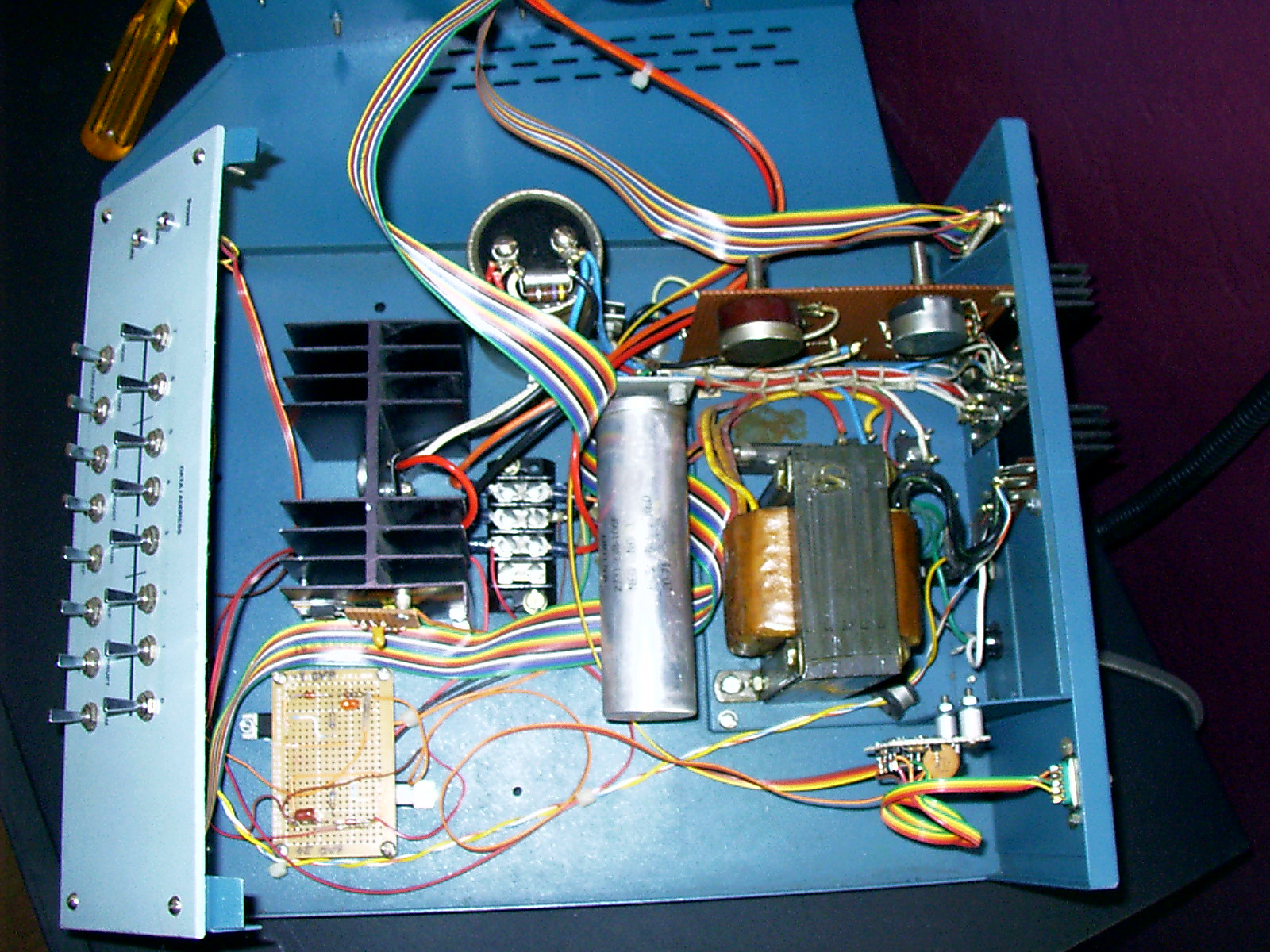
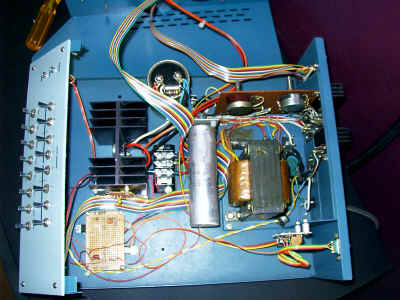
Although I have fully restored the transistorized power
supply, I chose not to use it since it has poor regulation compared to
chip regulators, and no over-voltage or over-current protection. I have
installed a chip based regulator in the main housing, side-by-side with
the transistor based one. The original transistor based regulator is
disconnected.
|
|
Inside view of power supply--new on left,
original on right
|
|
|
Spring 2001
My Mark 8 is fully restored. With the processor chip in
place, hours went by before I had the nerve to flip on the power switch! I
looked over the connections one last time, took a deep breath, and,
>CLICK!!< Lights on, no smoke! It worked almost
flawlessly! (I missed a bad connector finger on one of the boards that
caused one of the lamps to flicker.)
I loaded a short program and single stepped through it a
few times:
00 000 104
Jump
00 001 000
00 002 000
This single instruction program just jumps to itself
continuously. By the end of the next day, I had it connected to my ASR-33
Teletype, and running a save and restore program from paper tape.
Ah! So what is the extra chip doing on the Input Multiplex
card? It maps data from the front panel switches to an input port. It
allows data entry from the front panel switches under program control. The
original Mark 8 had no provision for reading the front panel switches
while running a program!
September 2003
Tired of cleaning dust from the boards and barking at everyone to
keep their fingers away, I had a plastic cover made by Hawkeye
Plastics to protect the
cards--it's beautiful!
The Mark-8 is complete, works great, has won many awards,
and is now on display in my mini-museum, man cave, AKA the living room. |
|
|
|